Flow guide: Rap lyric writing guide for better delivery
"Flow" is defined as "the rhythms and rhymes" of a hip-hop song's lyrics and how they interact. This fundamental element of hip-hop requires a deep understanding of how different lyrical components weave together to create a cohesive sound.
To improve your lyrical delivery, you must master the interplay between rhyme schemes and rhythm, often referred to as cadence. This guide explores how to balance these elements, the technical components of flow, and the structural integrity of your writing.
You will learn how to manage rhythmic complexity and understand the limitations of these techniques when applied to different musical tempos.
How do you define flow in hip-hop?
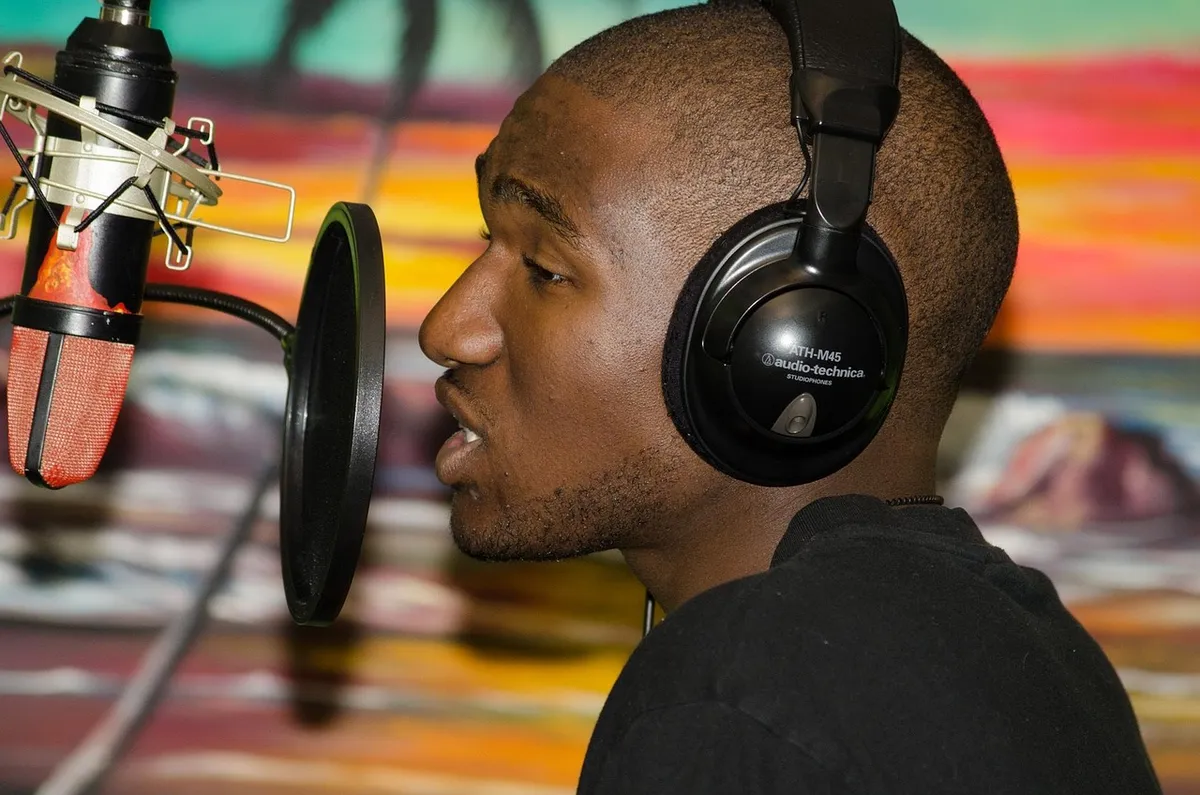
At midnight in the dimly lit studio, he taps his foot to the beat while trying to find a lyrical flow.

A songwriter sits at a desk with a notebook, tapping a pen against the paper to find a steady pulse. They scribble a line, then adjust the syllables to match the beat.
In the context of hip-hop, flow is defined as the rhythms and rhymes of a song's lyrics and how they interact. According to the book How to Rap, flow is broken down into three primary components: rhyme, rhyme schemes, and rhythm, which is also known as cadence.
Mastering these three elements allows an artist to move seamlessly over a beat.
When a writer focuses too heavily on complex rhyme schemes without considering the rhythm, the delivery can become clunky. A successful flow requires that the rhymes land in a way that supports the underlying cadence. This balance ensures the lyrics feel natural rather than forced.
The complexity of the rhyme schemes must always serve the established rhythmic structure.
Flow is the seamless marriage of lyrical content and rhythmic timing, representing how a rapper navigates the beat through cadence and phrasing.
What makes a rhyme scheme actually work? Rap lyric writing guide An artist stands before a microphone, testing different vowel sounds to see how they resonate in the room. They try a multi-syllabic rhyme, then strip it back to a simple end-rhyme to test the impact.
Rhyme schemes serve as the structural skeleton of a verse, providing a sense of familiarity and resolution for the listener. A scheme can be simple, such as AABB, or much more complex, involving internal rhymes that weave throughout the line.
These patterns create the predictable patterns that the listener's ear expects. Internal rhymes allow the lyrical structure to feel denser without sacrificing the overall rhythm.
The interaction between the rhyme and the rhythm is what creates the unique identity of a rapper's style. By varying the placement of rhymes within a bar, an artist can manipulate the tension and release of a track.

This technical variety prevents the listener from becoming fatigued by repetitive patterns. Shifting the placement of rhymes creates dynamic shifts in the listener's expectation.
A strong rhyme scheme relies on internal rhymes, multisyllabic patterns, and consistent vowel sounds to create a sense of sonic cohesion.
How does rhythm influence lyrical delivery?
He taps his fingers against the wooden desk at midnight, feeling the pulse of the beat as he shapes his lyrical flow.
A musician listens to a drum loop, nodding their head as they count the subdivisions of the beat. They try to fit a long sentence into a short musical space, adjusting the speed of their speech.
Rhythm, or cadence, is the timing of the words relative to the beat of the music. It dictates how the syllables are placed—whether they fall directly on the downbeat or dance around the syncopated spaces. This relationship between speech and percussion is the essence of a compelling delivery.
The placement of syllables determines the overall feel of the track.
If the rhythm is too rigid, the lyrics may sound robotic and lose their emotional connection. Conversely, if the rhythm is too loose, the lyrics might lose their connection to the beat entirely. The goal is to find a pocket where the words and the music feel inseparable.
Finding this pocket requires the artist to adjust their speech patterns dynamically to match the musical pulse.
Rhythm dictates the placement of syllables, determining whether the delivery feels driving and aggressive or laid-back and melodic.
How can I develop better flow? A writer stares at a blank page, then begins to map out the rhythmic structure of a verse before writing a single word. They use different colored pens to highlight different rhyme sounds.
Developing a consistent flow involves a methodical approach to both writing and vocal practice:

- Establish a steady rhythmic foundation by practicing with a metronome or a simple drum loop to internalize the tempo. This practice helps the artist internalize the required speed and timing of the music. 2. Draft lyrics that prioritize syllable counts, ensuring that the number of syllables in a line matches the intended rhythmic space. Prioritizing syllable counts ensures the lyrical line fits the established beat structure. 3. Experiment with different rhyme placements, moving rhymes from the end of the line to the middle to create more dynamic internal patterns. Varying rhyme placements allows the artist to control the flow's internal movement.
I found that mapping out the syllable counts visually on paper helped me identify where my rhythm was breaking down. Visual mapping provides a clear comparison between the written word and the intended musical timing.
A final check involves performing the verse at different speeds to ensure the rhyme schemes and rhythm remain coherent. If the words become unintelligible when the tempo increases, the rhyme scheme may be too dense for the chosen cadence.
This caution indicates that excessive syllable density can compromise clarity when the musical tempo accelerates.
| Element | Primary Function | Key Component |
|---|---|---|
| Rhyme | Provides sonic resolution | Rhyme schemes |
| Rhythm | Dictates timing and pulse | Cadence |
- Practice rapping over various BPMs to master timing.
- Experiment with syllable placement to break predictable patterns.
- Record your sessions to identify areas where the cadence feels clunky.
Can flow be applied to any musical genre?
A producer adjusts the sliders on a mixing board, trying to balance a heavy bassline with a fast-paced vocal track. They wonder if the lyrical complexity will overwhelm the melody.
While the concept of flow is central to hip-hop, its principles can be applied to various forms of vocal music. However, the specific focus on rhyme-driven rhythm is what distinguishes hip-hop flow from other genres like melodic pop or soul.
The technical constraints of a genre will always influence how flow is utilized. The inherent melodic structure of a genre can limit the degree of rhythmic freedom an artist possesses.
The limitation of these techniques is that a highly complex rhyme scheme may not translate well to much faster or much slower tempos. If the syllable density is too high, the listener may lose the ability to distinguish the rhyme, causing the flow to fail.
The speed of the music dictates the maximum density of syllables that can be maintained while remaining intelligible.
While rooted in hip-hop, the concept of flow can be adapted to any genre that utilizes rhythmic vocal delivery, such as jazz, soul, or pop.
The subject here is Rap lyric writing guide.
The same subject is also called Hip hop vocal technique.
The same subject is also called Improve rap writing skills.
The same subject is also called Advanced rap performance tips.
The same subject is also called Lyricism for rappers.
This part also covers Paul Edwards rap study.
This part also covers Better flow and lyrics.
Paul Edwards rap study
Related







Comments 0