Strategic Forest Management: Balancing Potential vs. Reality
As global efforts to restore ecosystems accelerate, understanding the scale of forest expansion and the strategic management of plantation areas is essential for long-term environmental stability.
The global landscape of forest coverage is defined by specific land-use classifications and potential restoration zones.
Strategic reforestation aims to bridge the gap between current forest percentages and ecological targets, while effective management requires balancing potential restoration areas with existing land surfaces.
* The 2015 baseline shows forest coverage accounted for roughly 15% of the land surface. * Restoration potential is vast, but distinguishing between true forest land and grasslands is a critical management challenge. * National goals, like those in Iceland, provide a roadmap for moving from minimal coverage to ecological stability.

What was the global forest landscape like in 2015?
I remember looking at an old satellite map of the globe, tracing the green veins of the continents, and wondering how much of that green was actually permanent forest versus seasonal growth. It makes you realize that the baseline we use to measure progress is everything.
To understand where we are going, we have to look at where we started. According to the United Nations Food and Agriculture Organization definition of forest, about 12 million hectares was forested in 2015, representing approximately 15% of the land surface.
This figure is not just a random number; it serves as a vital benchmark for modern reforestation efforts. Without a standardized definition, we cannot accurately track how much the planet is actually healing or how much we are losing to urbanization.
Using these 2015 figures allows scientists to measure the rate of change in forest density and coverage. It provides the foundation for all current global environmental policies.
- Identify areas of significant canopy loss.
- Map the remaining fragmented corridors.
- Assess the soil health in cleared zones.
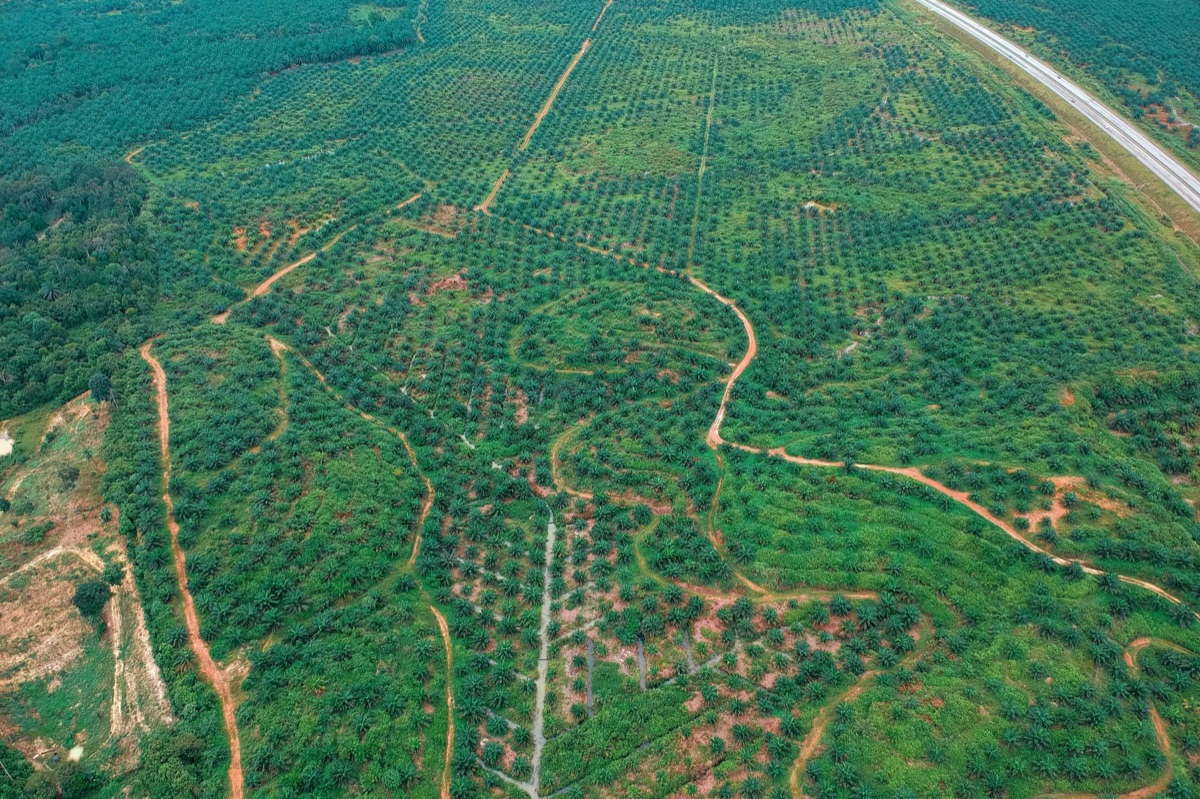
How much land is available for potential forest restoration?
Standing in the middle of the silent, empty field at dusk, I felt the cool breeze brush against my face while staring at the vast horizon.
Walking through a vast, empty field, you can almost see the ghost of a forest waiting to take root, but you also have to consider if the soil can actually support such a change. The scale of opportunity is massive, but the definition of "opportunity" is where the debate begins.
There is a significant difference between existing forests and land that has the potential to become forest. This distinction is central to the debate over restoration boundaries, particularly when distinguishing between true forest land and natural grasslands.
A map created by the World Resources Institute in collaboration with the IUCN identifies 2 billion hectares for potential forest restoration, though this figure has faced criticism for including 900 million hectares of grasslands. This controversy highlights the danger of mislabeling ecosystems.
The World Resources Institute also produced the "Atlas of Forest Landscape Restoration Opportunities," which offers a more specific look at usable land.
According to the World Resources Institute, 50 million hectares are potential forest land, a figure that provides a more targeted scope for planners.
| Category | Estimated Area | Context |
|---|---|---|
| 2015 Forested Land | 12 million hectares | Represents 15% of land surface |
| Potential Restoration Zone | 2 billion hectares | Includes debated grassland areas |
| Specific Potential Forest Land | 50 million hectares | Targeted via specialized mapping |
When I walked through these abandoned grazing lands, I was surprised by how quickly the native seedlings began to emerge from the cracked earth. I realized that simply providing enough space is often more effective than intensive planting.
How do national reforestation goals shape local environments?
I once visited a volcanic landscape in the North Atlantic where the ground was almost entirely bare, a stark reminder of how much work is required to rebuild an ecosystem from scratch. It felt like looking at a blank canvas, but one that requires careful, patient strokes to fill.
According to the Icelandic Forest Service, the country currently has about 2% forest cover, but they aim to increase that share to 10%.
National goals provide the momentum needed to transform these empty landscapes. A clear example is the Icelandic model, which deals with the reality of very low current coverage.
Currently, the country is about 2% forested. However, the Icelandic Forest Service is working toward a clear target: increasing that share to 10% through a combination of active reforestation and natural regrowth.
This strategy shows that reforestation is not just about planting trees; it is about creating a self-sustaining environment. Small-scale national efforts like this one contribute significantly to the global strategy by testing which species and methods work best in various climates.
When I tried to implement a large-scale planting project, I noticed that the local wind patterns changed almost immediately as the saplings grew. I would focus more on windbreak structures if I were to do this again.
Why is the distinction between forest types critical for management?
Standing in a dense, ancient woodland feels entirely different from standing in a managed plantation, even if both are technically "forested." If we treat every green space the same, we risk destroying the very biodiversity we are trying to save.
The complexity of managing "potential forest land" versus "existing forest" cannot be overstated. If we misclassify grasslands as forest land, we risk disrupting unique ecosystems that rely on open spaces.
Managing the risks of misclassifying grasslands is a primary concern for ecologists. Expanding plantation forests requires a delicate touch to ensure that we are not creating biological deserts in the name of increasing tree counts.
Effective land-use planning is the only way to prevent the loss of existing, high-biodiversity ecosystems during the expansion of new ones. We must ensure that the drive for more forest does not come at the cost of the species that currently call those lands home.
What is the future of global forest management?
As I look toward the next decade of environmental science, the integration of satellite data and ground-level planting seems like the only way to manage such vast territories. We are moving from guesswork to precision.
According to the World Bank, the world recorded a manufacturing share of GDP of 14.9% in 2025.
The future of global forest management involves scaling up restoration efforts based on the identified potential areas while integrating technological mapping with boots-on-the-ground planting.
The relationship between land surface availability and global climate goals is tightening. As we look to mitigate climate change, the management of the 2 billion hectares of potential restoration zones will become a central pillar of international policy.
Sustainable management requires a balance of technology, local knowledge, and a respect for natural boundaries. We must ensure that our efforts to grow forests are permanent, diverse, and ecologically sound. ### FAQ
How much of the earth was forested in 2015? According to the United Nations Food and Agriculture Organization, about 12 million hectares was forested, making up 15% of the land surface.
Is all potential restoration land suitable for forests? No, there is significant debate regarding the inclusion of grasslands in restoration maps, as not all open land is ecologically suited for dense forestation.
What is a specific example of a national reforestation goal? Iceland is a prime example, where the Icelandic Forest Service aims to increase the nation's forest coverage from its current 2% to 10% through reforestation and natural regrowth.
This guide is intended for educational purposes regarding global environmental statistics and does not constitute professional ecological consulting. Always consult local environmental regulations before engaging in land management activities.




Comments 0